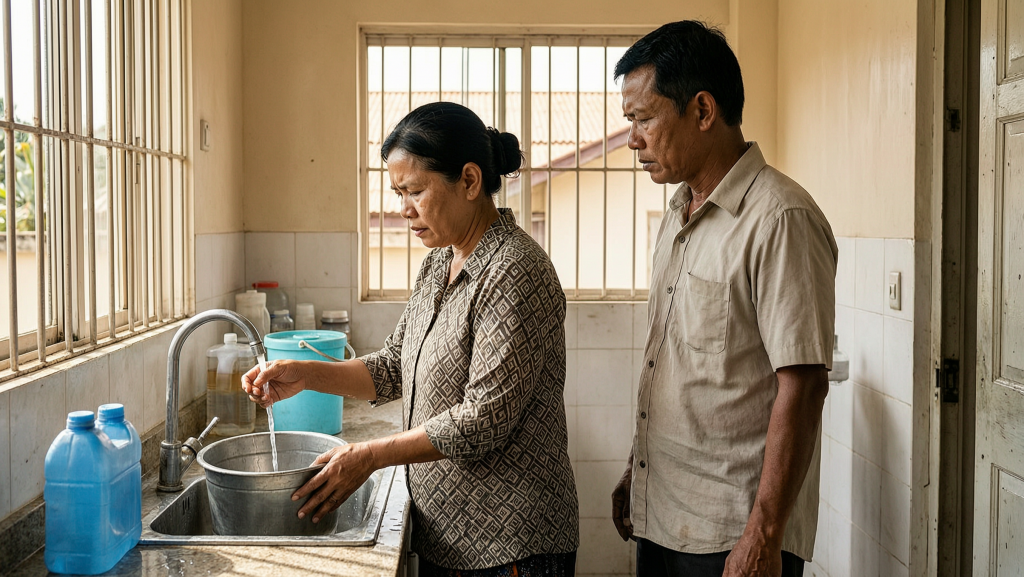
Mainit. Tuyo. At unti-unting humihina ang tubig.
Kapag naririnig natin ang “El Niño,” init agad ang naiisip. Pero sa bahay, mas nakakabahala minsan ang isang simpleng tanong: “Paano kung humina o mawalan kami ng tubig?”
Bago bumili ng malaking tangke o mas malakas na pump, alamin muna kung ano talaga ang problema. Dahil magkaiba ang solusyon sa kulang na supply, mahina ang pressure, at mabilis maubos na stored water.
Una: anong klaseng problema ang meron kayo?
1. May tubig, pero mahina ang pressure
Kung may tubig naman sa linya o tangke pero mahina sa shower o second floor, maaaring pressure o plumbing setup ang issue. Dito puwedeng pumasok ang tamang booster o water pump—but only after checking pipe size, source, height, at sabay-sabay na gamit.
2. May oras na talagang walang supply
Kung nawawala ang tubig for several hours, storage ang mas mahalagang usapan. Ang pump ay gumagalaw ng tubig; hindi ito gumagawa ng tubig. Kung walang laman ang source, walang maibibigay ang mas malakas na pump.
3. Mabilis maubos ang tangke
Bago mag-upgrade ng tank, check muna ang leaks, running toilets, dripping faucets, at habits sa washing at cleaning. Minsan, ang “kulang ang storage” ay actually “may tubig na nasasayang.”
Simple household check
For one day, observe: ilang tao ang gumagamit, kailan pinakamalakas ang consumption, gaano katagal nawawala ang supply, at alin ang essential—ligo, hugas, CR, pagluluto. From there, saka natin ini-estimate ang reserve na practical para sa bahay.
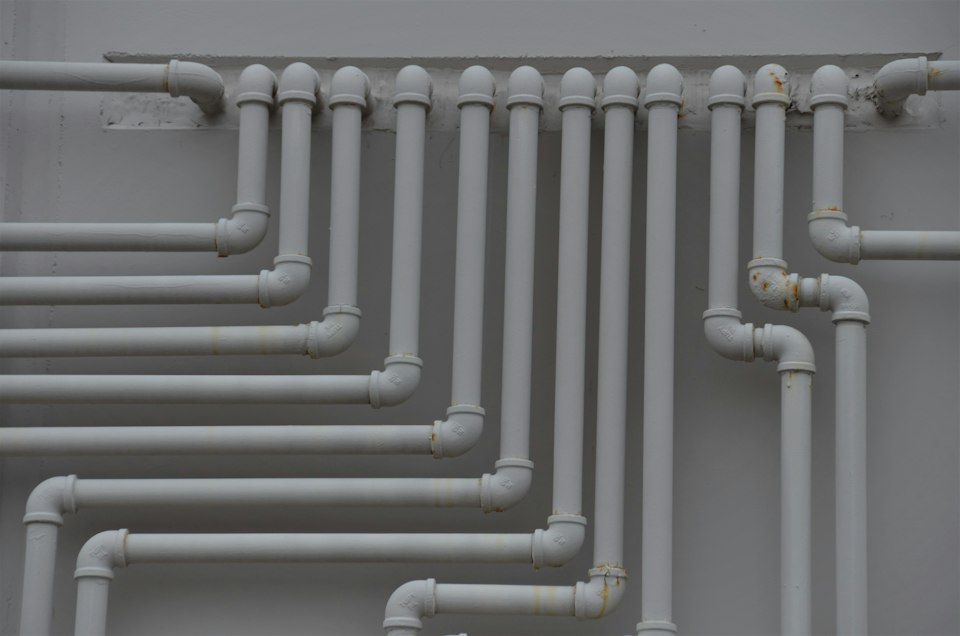
Water tank vs water pump
| Problem | Usually start by checking |
|---|---|
| Intermittent water supply | Storage tank / reserve |
| Weak pressure from existing stored water | Pump/booster + plumbing |
| Deep source or well | Pump type, depth, head, pipe size |
| Tank empties too quickly | Leaks + actual daily consumption |
Huwag bumili ng pump dahil HP lang ang tinitingnan
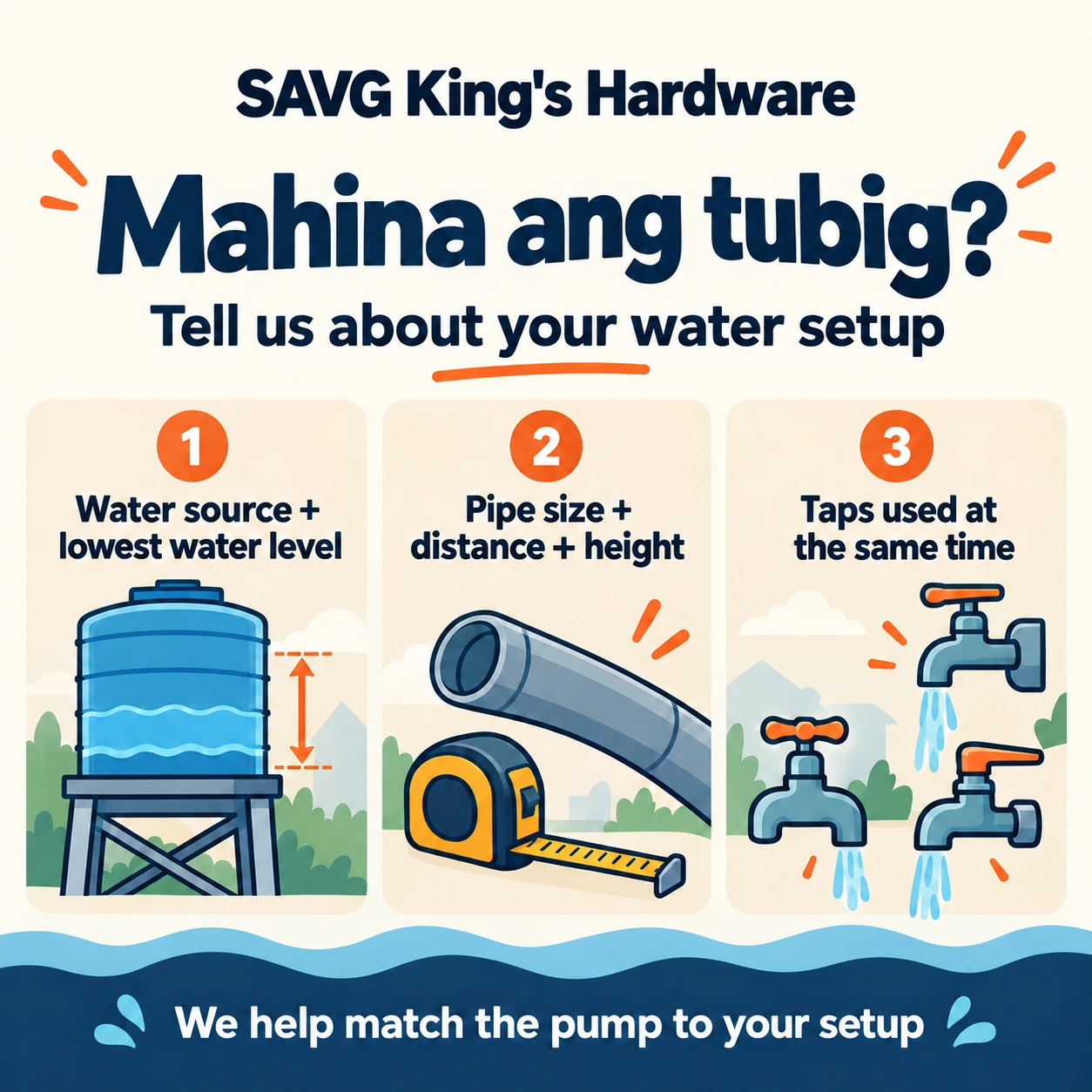
A 1HP pump is not automatically “better” than a 0.5HP pump for every house. The right unit depends on the source, vertical lift, distance, pipe size and required flow.
For example, SAVG currently carries units such as the Marflo MF-QB60 0.5HP Peripheral Water Pump, Marflo MF-JET100 1HP Self-Priming Jet Pump, and Pedrollo JSWm 2A 1.5HP Self-Priming Jet Pump. These are different tools for different setups—not a “good, better, best” ladder.
Simple water-storage planning example
Suppose a household tracks its essential use during an interruption at an illustrative 60 liters per person per day for four people. That would be 240 liters per day and 480 liters for two days. This is an arithmetic illustration, not a universal consumption standard or tank recommendation. Actual needs vary with drinking, cooking, bathing, sanitation and local conditions.
Check the quality of stored water, tank sanitation, structural support for the filled tank’s weight, safe distribution and local plumbing requirements. Potable-water storage requires materials and hygiene appropriate to drinking-water use.
When to choose storage, plumbing repair or pump assistance
Intermittent supply: investigate a properly sized reserve first. Low pressure with adequate stored water: check pipe restrictions, elevation, controls and whether an appropriately engineered pump would help. Unexpected high consumption: inspect for leaks before buying more hardware.
For suitable systems, compare the Marflo MF-QB60 peripheral pump or Marflo MF-JET100 jet pump only once the source, operating head and required flow are known. A bigger horsepower label alone does not solve an empty or undersized water supply.
Before El Niño becomes your emergency
Do three things now: check for leaks, know how long your household can operate without fresh supply, and understand whether your real issue is storage, pressure, or source.
If you’re unsure, take photos of your current tank, pump, pipe size and water source, then use the SAVG Tool Advisor. The goal is not to sell you the biggest pump. It’s to help you build the right water setup before the problem becomes stressful.